Your crawl space may be out of sight, but it plays an important role in the health and stability of your home. Moisture, mold, damaged insulation, plumbing leaks, and structural problems can begin below your floors and go unnoticed until they become expensive repairs. For homeowners in Northeast Ohio, inspecting your crawl space twice a year can help you catch warning signs early. The best times are in the spring, after snow and heavy rain, and in the fall, before freezing temperatures arrive.
What to Bring:
- Flashlight or headlamp
- Gloves
- Protective mask
- Safety glasses
- Smartphone for photos
- Flathead screwdriver
*Do NOT enter the crawl space if you see standing water near electrical equipment, exposed wiring, sewage, unstable supports, or dangerous pests. Contact a professional instead.
1. Check for Water and Moisture
Look for standing water, wet soil, muddy areas, or water stains along the foundation walls. Water can enter a crawl space through foundation cracks, poor drainage, plumbing leaks, heavy rain, or sump pump problems. White powdery marks on concrete walls, known as efflorescence, may also indicate that moisture is entering through the foundation. Recurring crawl space moisture should be addressed before it leads to mold, wood rot, or structural damage.
2. Inspect the Vapor Barrier
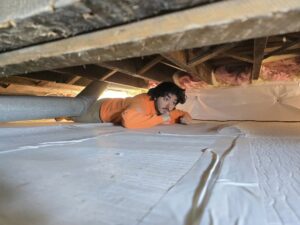
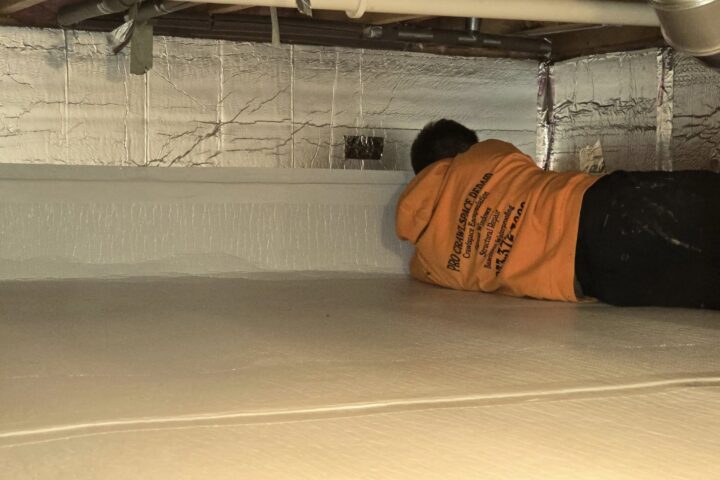
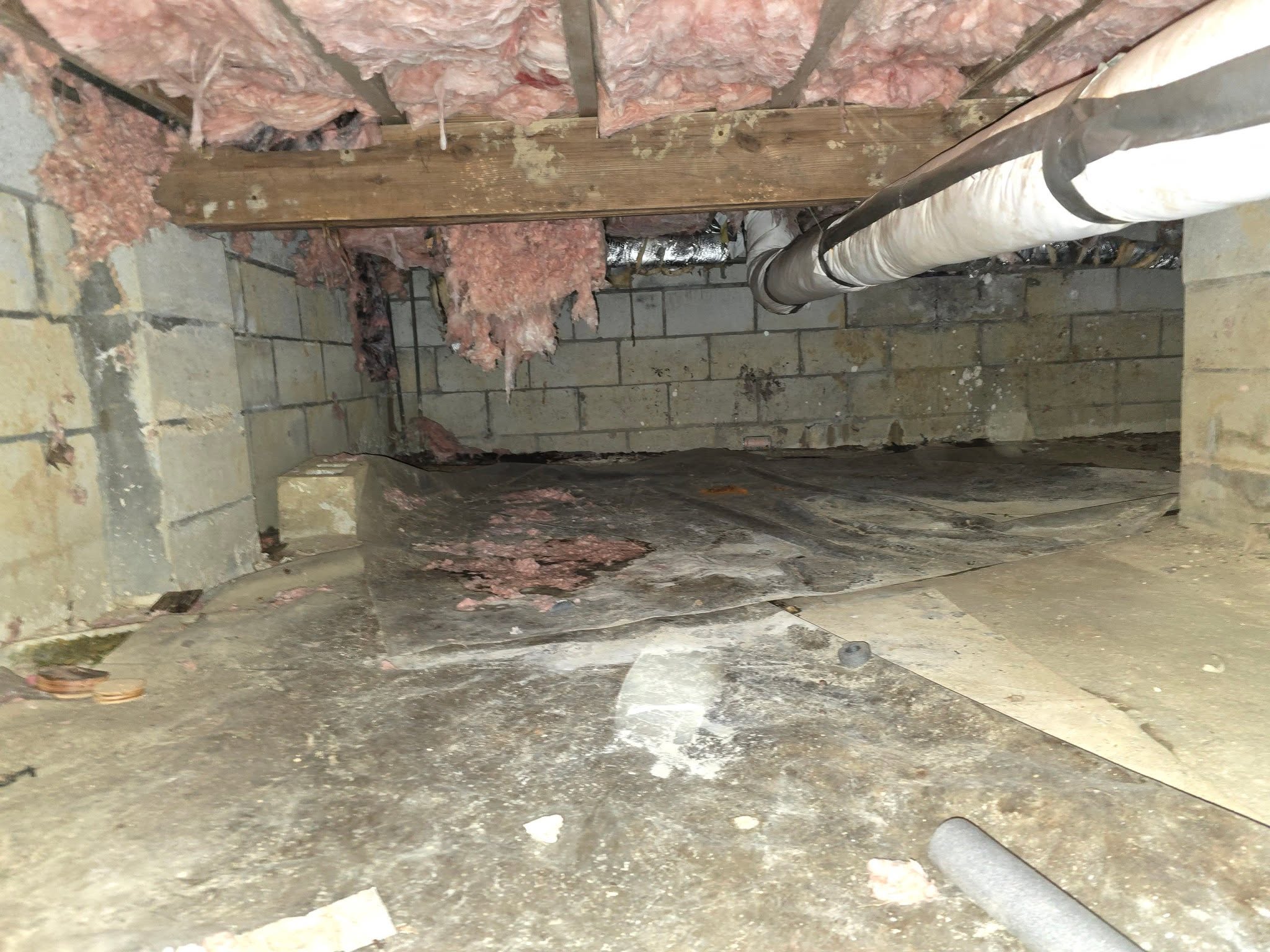
A crawl space vapor barrier helps prevent ground moisture from entering the space. Check the plastic sheeting for tears, gaps, exposed soil, or sections that have moved out of place. If the vapor barrier is damaged or does not fully cover the ground, your home may benefit from crawl space encapsulation. Encapsulation helps create a cleaner, drier, and more controlled space beneath the home.
3. Look for Plumbing Leaks
Inspect pipes and plumbing connections for dripping water, corrosion, stains, or condensation. Even a small leak can keep insulation and wooden framing wet. During the fall, pay close attention to pipes near exterior walls because cold Northeast Ohio temperatures can increase the risk of freezing.
4. Examine Wood and Structural Supports
Check floor joists, beams, support posts, and concrete blocks for cracks, leaning, sagging, or visible damage. Gently press a screwdriver against exposed wood. The wood should feel firm. Soft, spongy, or crumbling wood may be a sign of wood rot. Uneven floors, sticking doors, wall cracks, or bouncy flooring inside the home may also point to crawl space structural problems.
5. Check the Insulation
Crawl space insulation should be dry and securely installed. Look for insulation that is: Sagging or falling, wet or stained, missing, damaged by pests, or covered in mold. Wet or damaged insulation can reduce energy efficiency and make floors above the crawl space feel colder.
6. Look for Mold and Musty Odors
Check the wooden framing and subfloor for white, gray, green, or black growth. A strong musty smell can also be a sign of excessive moisture or mold. Cleaning visible mold without fixing the moisture source is usually only a temporary solution. Crawl space waterproofing, encapsulation, drainage improvements, or a dehumidifier may be needed to control the problem.
7. Watch for Pest Activity
Look for droppings, nesting materials, damaged insulation, chewed wires, or mud tubes along the foundation walls. Pests often enter through open vents, damaged access doors, or gaps around plumbing and utility lines. Pest damage can also create new openings for moisture and humid air.
8. Test the Sump Pump
If your crawl space has a sump pump, check that it is securely positioned and free of debris.
Pour a small amount of water into the sump basin to make sure the pump turns on and removes the water. Confirm that the discharge line carries water away from the foundation. A properly working sump pump is an important part of many crawl space waterproofing systems.
Crawl Space Inspection Checklist
- Check for standing water and wet soil.
- Inspect the vapor barrier for gaps or tears.
- Look for moisture stains on foundation walls.
- Check plumbing pipes for leaks.
- Examine wood for rot or softness.
- Inspect support posts and beams.
- Look for sagging or wet insulation.
- Check for mold and musty odors.
- Watch for pest activity.
- Test the sump pump.
- Take photos of anything concerning.
Schedule a professional crawl space inspection if you notice:
- Standing water
- Persistent humidity
- Mold or musty odors
- Soft or rotting wood
- Sagging or uneven floors
- Leaning support posts
- Foundation cracks
- Damaged insulation
- Sump pump failure
- Recurring plumbing leaks
Protect Your Northeast Ohio Home
Crawl space problems rarely go away on their own. Moisture, mold, wood rot, and structural damage often become more serious over time. Pro Crawlspace Repair helps Northeast Ohio homeowners with crawl space repair, waterproofing, encapsulation, insulation, sump pumps, dehumidifiers, and structural support solutions. If you notice water, mold, damaged wood, sagging insulation, or structural concerns beneath your home, contact Pro Crawlspace Repair to schedule a professional crawl space inspection.